The Road to Autonomous Intelligence: Insights from Andrej Karpathy
At Social Gains, we’re always on the lookout for groundbreaking developments in AI and technology. Today, we’re diving deep into a fascinating discussion with Andrej Karpathy, a titan in the world of artificial intelligence. Karpathy, a founding member of OpenAI and former Senior Director of AI at Tesla, recently shared his thoughts on the No Priors podcast, giving us a glimpse into the future of autonomous systems and AI education.
The Evolution of Self-Driving Cars
Karpathy kicked off the discussion by exploring the journey of self-driving technology. He highlighted the significant progress made in recent years, particularly in the approaches taken by industry leaders like Tesla and Waymo.
Tesla vs. Waymo: Two Paths to Autonomy
Tesla and Waymo, two giants in the autonomous vehicle space, have taken markedly different approaches to achieving self-driving capabilities:
- Tesla’s Approach: Tesla has opted for a vision-based system, relying heavily on cameras and neural networks to interpret the environment. This method aims to mimic human perception and decision-making processes.
- Waymo’s Strategy: In contrast, Waymo employs a more traditional approach, using a combination of lidar, radar, and cameras. This multi-sensor fusion aims to create a comprehensive 3D map of the vehicle’s surroundings.
Karpathy delved into the pros and cons of each method, noting that Tesla’s approach allows for quicker scaling and adaptation to new environments, while Waymo’s system might offer more precise object detection in certain scenarios.
Optimus: Tesla’s Humanoid Robot
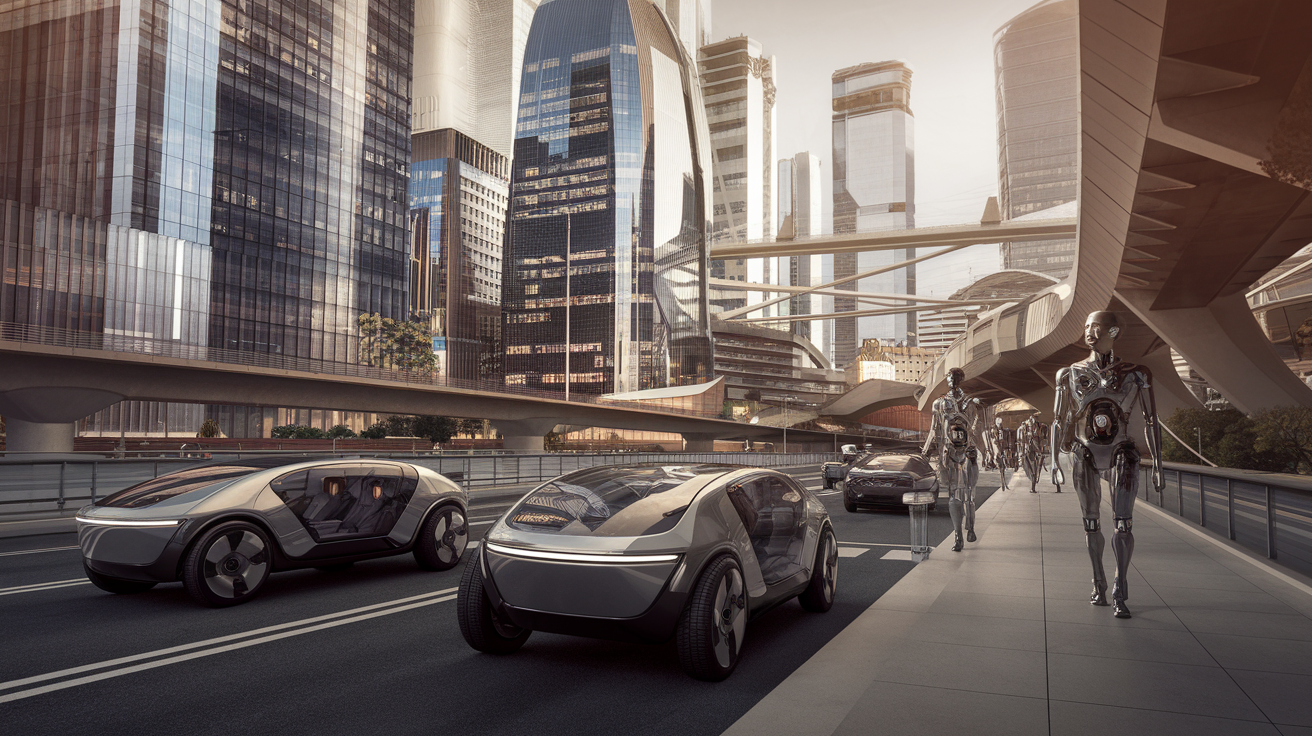
The conversation then shifted to Tesla’s ambitious Optimus project, a humanoid robot designed to perform a wide range of tasks. Karpathy provided insights into how Tesla is leveraging its automotive AI models to train Optimus, creating a fascinating crossover between vehicular and humanoid robotics.
Transferring Automotive AI to Humanoid Robots
Karpathy explained that many of the neural networks developed for Tesla’s self-driving cars are being adapted for use in Optimus. This includes:
- Visual perception systems
- Object recognition algorithms
- Path planning and navigation models
This transfer of knowledge demonstrates the versatility of AI models and how they can be applied across different domains, potentially accelerating the development of advanced robotics.
The Humanoid Form Factor
When asked about the reasoning behind choosing a humanoid form for Optimus, Karpathy offered several compelling arguments:
- Adaptability: A human-like form allows the robot to operate in environments designed for humans without significant modifications.
- Intuitive Interaction: People find it easier to interact with and instruct robots that have a familiar form.
- Versatility: The humanoid design enables the robot to perform a wide range of tasks, from delicate manipulations to heavy lifting.
Despite these advantages, Karpathy acknowledged the significant challenges that remain in robotics, particularly in areas like dexterity, balance, and real-time decision-making in complex environments.
Current Bottlenecks in AI Progress
As the conversation progressed, Karpathy shared his thoughts on the current limitations holding back AI development. He identified several key areas:
1. Computational Power
While we’ve seen tremendous increases in computing capabilities, the demands of increasingly complex AI models continue to push the boundaries of what’s possible. Karpathy suggested that breakthroughs in hardware design and efficiency could lead to significant leaps in AI capabilities.
2. Data Quality and Quantity
The old adage “garbage in, garbage out” holds true in AI. Karpathy emphasized the need for high-quality, diverse datasets to train robust and reliable AI systems. He noted that data collection and curation remain labor-intensive processes that could benefit from automation.
3. Algorithm Efficiency
While neural networks have proven incredibly powerful, there’s still room for improvement in how these networks process information. Karpathy hinted at ongoing research into more efficient algorithms that could dramatically reduce the computational resources required for AI tasks.
Merging Human Cognition with AI Capabilities
One of the most intriguing segments of the discussion centered on the potential integration of AI with human cognition. Karpathy explored several possibilities:
Brain-Computer Interfaces
Advancements in neurotechnology could allow for direct communication between the human brain and AI systems. This could enhance human decision-making, memory, and information processing capabilities.
Augmented Reality (AR) Integration
AR technologies could serve as a bridge between human perception and AI analysis, overlaying AI-generated insights onto our view of the world in real-time.
AI as a Cognitive Extension
Rather than replacing human thinking, Karpathy suggested that AI could act as an extension of our cognitive abilities, helping us to process and understand complex information more effectively.
AI-Driven Education: Reshaping Knowledge Networks
Karpathy’s current work focuses on AI-enabled education, an area with immense potential to transform how we learn and share knowledge. At Social Gains, we’re particularly interested in how these developments could impact professional development and skill acquisition in the digital marketing sphere.
Personalized Learning Paths
AI systems could analyze a learner’s strengths, weaknesses, and learning style to create tailored educational experiences. This personalization could dramatically increase the efficiency and effectiveness of learning.
Real-Time Knowledge Updates
In rapidly evolving fields like digital marketing, AI could ensure that educational content stays up-to-date with the latest trends and best practices, providing learners with the most current information.
Collaborative Learning Networks
AI could facilitate the creation of dynamic peer networks, connecting learners with complementary skills and knowledge. This could foster a more collaborative and engaging learning environment.
Preparing for the AI-Driven Future
As the interview drew to a close, Karpathy offered advice for young people looking to prepare for a future increasingly shaped by AI:
- Develop a Strong Foundation in Mathematics: Understanding concepts like linear algebra, calculus, and statistics is crucial for working with AI systems.
- Learn Programming: Proficiency in languages like Python and familiarity with machine learning frameworks are essential skills.
- Cultivate Critical Thinking: The ability to analyze problems, identify patterns, and think creatively will remain valuable as AI systems become more prevalent.
- Stay Curious and Adaptable: The field of AI is evolving rapidly, so a willingness to continuously learn and adapt is key to long-term success.
At Social Gains, we’re committed to helping businesses navigate the ever-changing landscape of digital marketing and AI technology. As we continue to explore the possibilities offered by AI, we’re excited to share insights and strategies that can help you stay ahead of the curve.
Whether you’re looking to automate your workflows, enhance your content production, or leverage AI for better decision-making, our community is here to support you. Join us as we venture into this new frontier of technology and discover how AI can drive real, measurable results for your business.